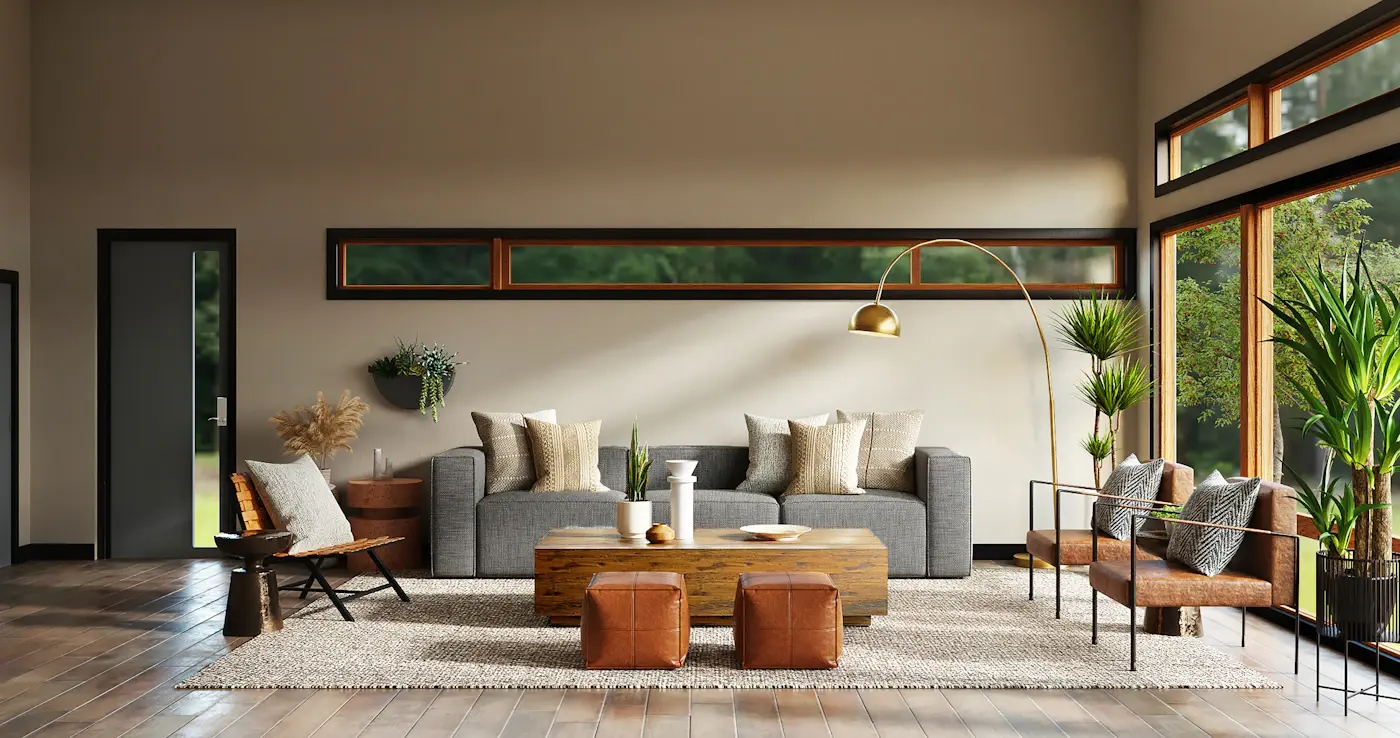
A small living room that feels considered, not crowded
Start with the route through the room. Then give the furniture a purpose, repeat a few materials, and leave room for daily life.
Draw the room you actually have
Measure each wall, doorway and window, then mark sockets, radiators and door swings. Draw the furniture you intend to keep before looking for anything new. The most useful plan may be a smaller side table rather than a smaller sofa. Check the walking route from the entrance to the seat you use most. A layout that requires stepping around a table every day is asking too much of the room.
Choose one visual anchor
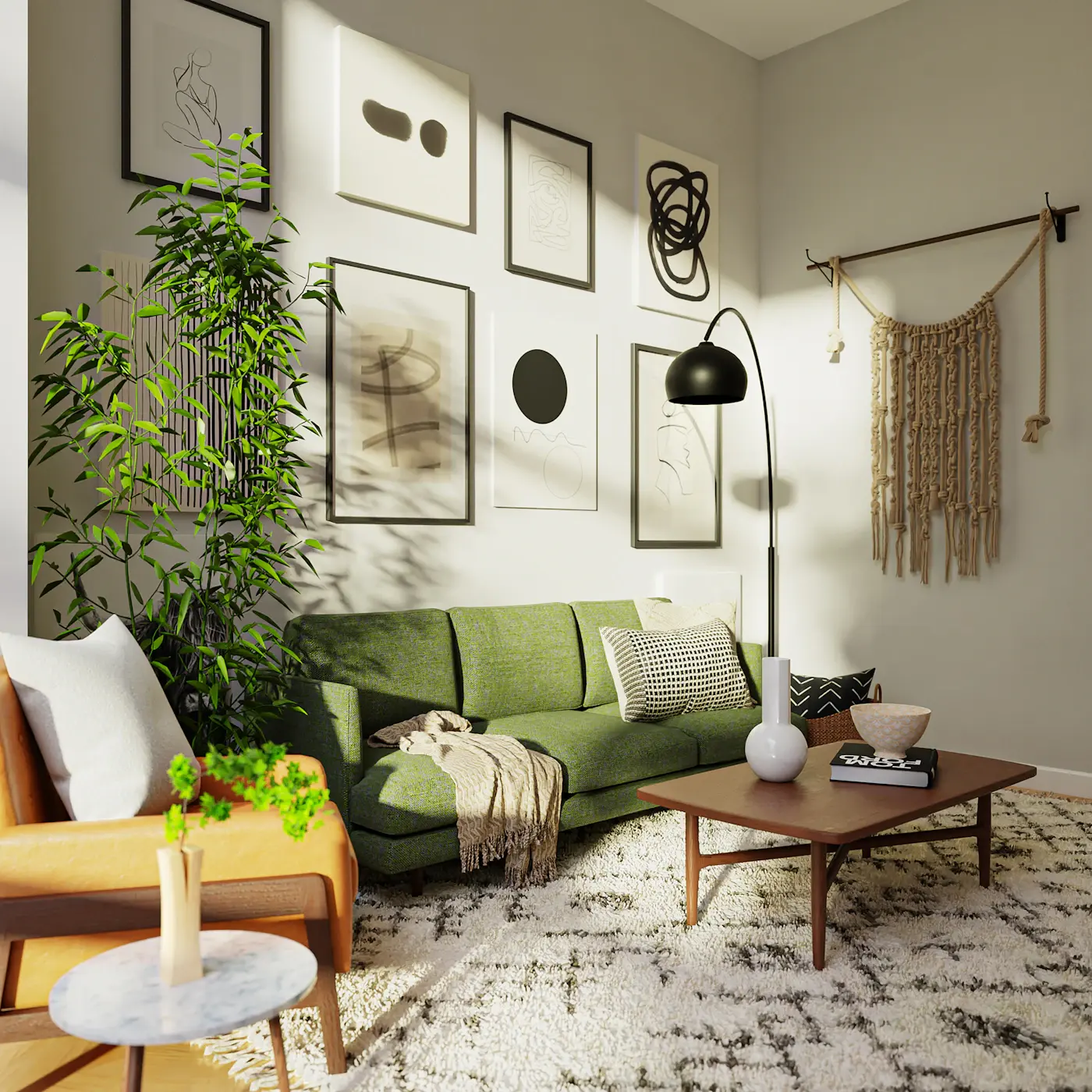
Use the sofa, a rug you already own, or a large artwork as the starting point. Pull two supporting colors from it and repeat them in modest quantities. A dark mirror frame can echo table legs; a woven basket can repeat the texture of a rug. Repeating finishes gives separate purchases a relationship without requiring a matching set.
Give every surface a job
Reserve part of the coffee table for a cup or a book. Put the objects you reach for in an accessible basket, and keep the decorative items to one small grouping. Try the arrangement with existing objects first. If a tray prevents you from using the table comfortably, the tray is not solving the right problem.
Measure before the final click
Use paper or masking tape to mark a prospective purchase’s footprint, testing the tape on the floor finish first. Include the space needed to open a drawer or lift a basket. Check the delivered dimensions, assembly requirements and return terms on the retailer’s page. A photograph is a styling reference, not a reliable scale drawing.
Original editorial planning guidance. No firsthand product testing is claimed. Follow current manufacturer instructions for any installation or product use.